
UX/UI Design Explained: Do You Really Need a Brand Guide?
Confused by terms like UX, UI, and brand guides? Here is how they actually connect and why they matter before you build a website.
If you’ve ever started shopping for a new website and found yourself drowning in terminology, UX, UI, brand guides, style guides, logos, identity systems, and so on. You’re not alone. These words get thrown around constantly, and almost nobody stops to explain how they actually connect.
They're layers. Each one building on the one before it. When thoughtfully crafted and assembled, they make up the components of a website that looks intentional, functions well, and holds up over time.
Start With the Logo and Brand Guide
A logo is not your brand. But it is the anchor of it.
A purposeful logo, designed with intent, comes with a full set of assets: multiple size variants, color alternates for light and dark backgrounds, icon-only versions, and clear rules for how and where each should be used. These assets make up a brand guide, a comprehensive guide that defines your typefaces, your color palette, your visual tone, and the rules that keep everything consistent across every touchpoint.
The brand guide answers a foundational question: what does this company look and feel like?
Without that answer clearly documented, everything downstream gets harder. Design decisions become guesswork. Vendors and team members interpret the brand differently. The result is a business that feels inconsistent, even if individual pieces look fine on their own.
Branding Translates the Guide Into Identity
Once the visual and verbal assets exist, branding is what connects them to tell a story.
Take serif vs sans-serif fonts, for example. Serif means a slight projection finishing off a stroke of a letter in certain typefaces. The sans part of sans-serif means without (so, without serifs).

The slight difference between these two ends up communicating a lot about personality. Serif fonts carry a sense of history and authority, the kind of weight that makes a law firm, a financial institution, or a heritage brand feel established and trustworthy. Sans-serif fonts, on the other hand, feel clean, modern, and approachable, which is why you see them everywhere in tech, wellness, and consumer brands that want to feel like a friend rather than an institution. Neither is better than the other, they just say different things, and choosing one over the other is an early signal to your audience about who you are before they read a single word.
It is the difference between a business that communicates clearly and one that leaves people unsure of what it stands for.
Strong branding means customers know what to expect before they ever speak to you. It builds recognition and trust over time, which is the foundation that makes marketing more effective.
UX and UI: The Bridge Between Brand and Website
This is a frequently skipped step in most website projects. The step that separates websites that last from ones that get redesigned down the line.
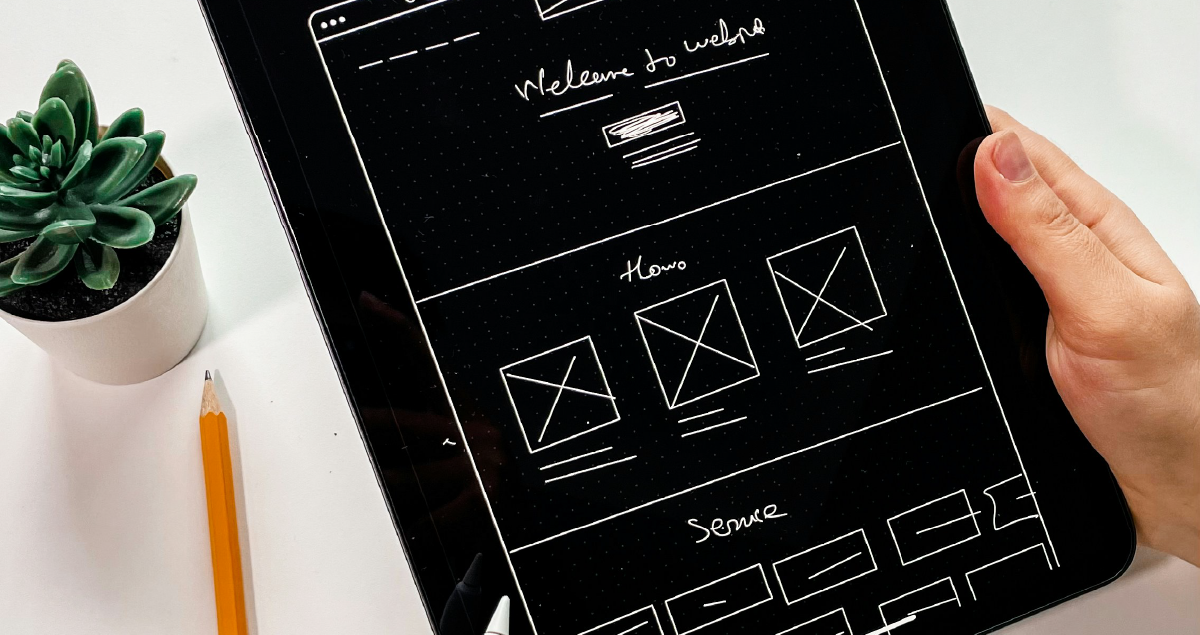
Before development begins, there is a critical approval phase where branding is translated into the actual experience of using your website. This is UX and UI. But what do they mean?
UX (user experience) is the structure. It defines how users move through your site. What pages exist, how they connect, what actions are prioritized, and how to move the user from entry to conversion..
UI (user interface) is the visual. It takes that UX structure and dresses it in the visual language of your brand: your colors, your typography, the way components behave, the spacing, the hierarchy – everything.
Together, UX and UI act as a blueprint. They are reviewed and approved before a single page is built. This matters because changes at the design stage cost a fraction of what they cost during development. The approval step exists to make sure everyone is aligned on exactly what is being built and why.
Skipping this phase is one of the most common reasons websites end up needing to be redesigned within a year or two. The site gets built, and only then do clients realize the structure does not serve the business the way it should.
What We Include With Every Website
Every website we build comes with a site style guide baked into the background of the project. This keeps your fonts, colors, formatting, and UI components consistent, giving the site a cohesive, intentional feel throughout.
We also include a text-based logo with a dark and light alternate, sized appropriately for your navigation bar and footer. If you’re working within a tighter budget, this gives you a clean, professional mark to launch your website without the investment of a full identity project.
Our default design approach is clean, elegant, and minimalistic. Purposefully simple and thoughtful. We design for intuition, meaning users should always know where they are, where to go next, and what to do. Every element earns its place.
That said, if you want something bigger, bolder, or built around a completely different aesthetic, we can go there. Loud, layered, maximalist, editorial, avant-garde. Our standard is minimal by default, not by limitation.
Want to Go Deeper? A Brand Guide Is Worth the Investment
If you are serious about building a business with a long runway, we strongly recommend investing in a full brand guide before your website launches.
We offer competitive market rates for bespoke brand identity work. That includes a purposeful logo designed for your identity, multiple size and color alternates, icon variants, a defined typeface system, a color palette with usage rules, and the full documentation that ties it all together.
A proper brand guide is not just a design deliverable. It is an operational asset. It makes every future project, campaign, and vendor relationship faster, cleaner, and more consistent.
That said, we genuinely encourage you to shop around. Find a designer whose portfolio feels aligned with the direction you have in mind. The best brand work happens when there is real chemistry between client and designer. If that turns out to be someone other than us, we’ll happily build your site with UX and UI that brings their guide to life.
The Bottom Line
A great website is not just a development project. It is the visible result of decisions made upstream: a logo with real craft behind it, a brand guide that documents the identity, branding that shapes the story, and UX and UI that translate all of it into a structure worth building.
When those layers are in place before the build begins, the result is a site that is easier to recognize, easier to trust, and built to grow with your business.
Ready to get started? Whether you are coming in with a complete brand guide or starting from scratch, we would be glad to walk you through what the right approach looks like for where you are right now.
